Pangguangshu – Bladder Shu – Bladder 28
 Winter usually brings a wave of Water related conditions and issues into the treatment room. As the high tide of the year moves through the Water Element, it puts pressure on any existing imbalances in Water. This can include lower back pain and stiffness, cold invading the body, urinary system dysfunction, problems with the bladder, kidneys, ears and bones, fears and phobias, and reduced perseverance.
As we age, the lifelong decline in our Kidney Qi begins to affect all of these resonances of the Water Element. And the cold of the winter creates added pressure on our declining resources. This inspires some to migrate to warmer climate zones such as Queensland.
An acupoint that offers support for conditions of the waterworks is Pangguangshu, Bladder 28. This is the shu point of Bladder and treats that organ directly. The shu points are particularly useful in treating chronic conditions, those that have become entrenched for some time.
Bladder shu is used to treat difficult, painful, hesitant and frequent urination. These symptoms are associated with an enlarged prostate, and so the point is very helpful for treating the prostate conditions which afflict many older men. It is also used to treat cystitis which is an inflammation of the urinary tract, usually caused by infection. The effect of Pangguangshu also extends to the genitals, treating such conditions as swelling, pain or itching of the external genitals.
Bladder 28 is also useful in treating lower back pain as well as pain or stiffness in the sacrum, coccyx and buttocks. It has an influence over the Kidneys and can be used in combination with the Kidney shu point, Bladder 23. (See article here.) Because of its influence over the lower burner, it can be used to treat lower abdominal pain and fullness, and constipation caused by Qi stagnation.
At the psycho-emotional level, stagnation in the Bladder expresses as difficulty managing one’s resources and reserves. This can produce a sense of urgency and anxiety about life, leading to a tendency to use effort and willpower to push through obstacles in the way. There is an apt expression for this, ‘pushing the river’, which suggests using draining effort rather than going with the flow.
Zhi is the spirit of Water. It is often translated as will. When our Water Element is in balance and harmony, the power that fuels action arises naturally and spontaneously from true will that is not dependent on a pushing, urgent, straining effort. Pangguangshu can help to keep us in the flow.
Location of Bladder 28
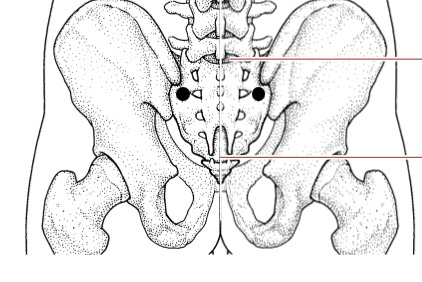
The point is 1.5 cun lateral to the midline at the level of the second sacral foramen (hollow). Find the top of the sacrum and go two fingers width below this and two fingers width lateral to find the point.

