Friday 29th May 2026
Late Early winter
Mount Barker Summit – Womma Mu Kurta
I arrive mid-morning to a grey summit under a sinking sky. A weak sun shows its outline behind layered clouds. In the car park, a group of elderly volunteers sets up for a shift of eradicating invasive species. Otherwise, I have the mountain to myself.
It is years since I’ve been here. I used to visit several times a year, delighting in the seasonal changes, charting the pulsing of the year. Out and in. Up and down. Hot and cold. Yang and Yin. Now I have made a pact to visit at least once every season over the next year and to make a written and photographic record.
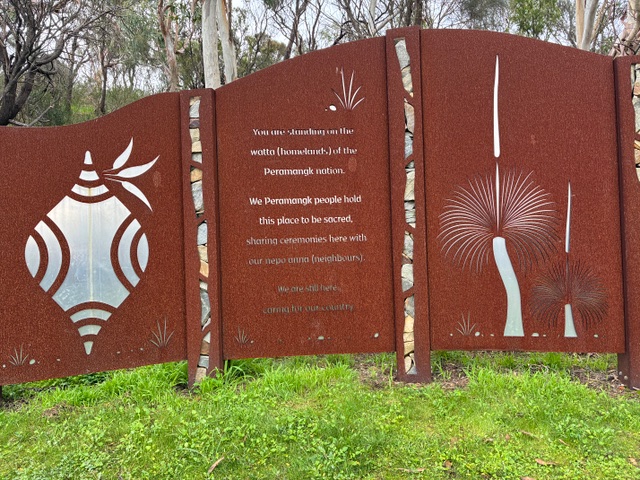
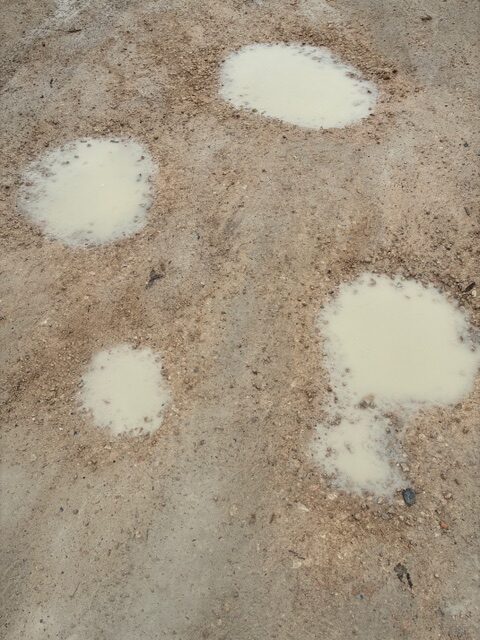
There have been changes to the signage around the carpark. Two beautiful installations of rock and metal welcome me to country of the Peramangk people. I used to feel something of an intruder up here, but now my heart is touched and I feel welcome to visit this sacred land. To reach the sculptures I step over puddles left by recent rain. Like meaningful configurations of stars, one group jumps out as a representation of the Five Element cycle. This too feels like Nature’s welcome for my Elemental project.
There is a short walk to the trig point on the summit, but today I choose the 2-kilometre loop that runs either side of the north-south ridge. On a map, the loop has the look of a stone axe which feels appropriate to the ancient land I am traversing.
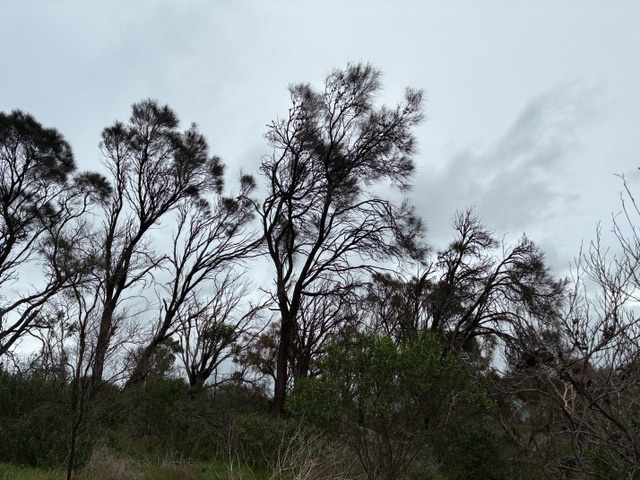
In this early winter, the temperatures are cool but not too cold. The path is muddy, the landscape damp from early rains. A few mushrooms sprout by the path, something I’ve never noticed here before. I am alone, see no-one, and enjoy the solitary commune with nature. I am in my feet as I pick across the rocky outcrops in the path. When I look up, it is to gum trees windbent across a greyscape. I smile inside as the land seeps upwards from my boots, spreading through me like a blotter soaking ink.
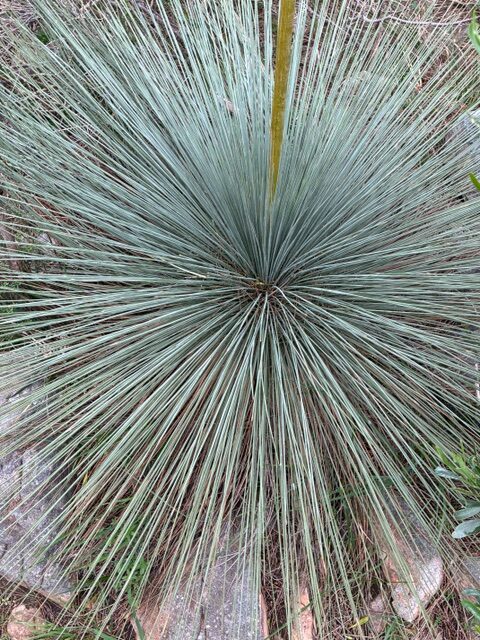
I have been sheltered from the wind thus far, but at the northern end of the loop, it gusts from the west and bites cold through my jacket. I welcome the discomfort as part of plumbing the Water Element. Here my eye is caught by a silver-green shimmer of movement on the wind. It is a young grass tree, xanthorrhoea, its multitude of slender spikes radiating light. In the greyness of the day it stands out in a way I haven’t noticed on brighter days. The winter backdrop brings these plants to the fore, like the bass in a band stepping forward for its solo.
On the west side, the path drops down through more dense shrubs and trees, and the light fades to gloom in places. I must stoop and bend to avoid drooping branches. It is very quiet here, sheltered from the noise of the south-eastern freeway which sprays the eastern side of the ridge with its endless hiss. The silence deepens my connection with the land and with the Water Element that I have come to seek.
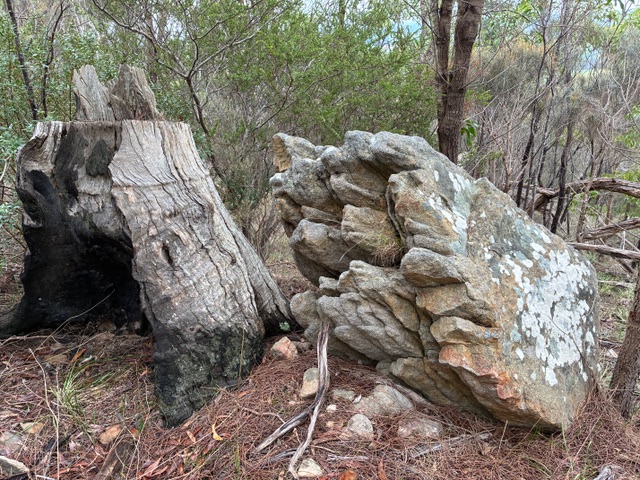
My mind is caught by a curious sight which I stop to photograph. On the downslope, an ancient tree stump, smoothed with age and blackened by fire, nestles with a rock formation that echoes its form. Wood becomes stone; stone, wood. I think of the Wood-Metal axis of the Five Element Cycle which represents the seesaw of the ethereal and the corporeal. These Elements surround the Water Element which is the focus of my day, but remind me of the interconnectedness of all the Elements.
The journey on this side of the ridge seems longer, for I have slowed down to match the yin nature of this part of the path. But finally, it takes me upwards on a slippery, stony slope to a broad path that returns to the car park.
I return to the installations of country and once again am touched by their welcome. I will return here to continue to chart the passage of the seasons and the Elements. Perhaps again in winter, certainly in spring.
I invite you to find your own special place in nature, and visit it in each season over the next year. You may find some unexpected discoveries, not only in nature, but in yourself.