Category Archives: Metal Element

AUTUMN FOOD

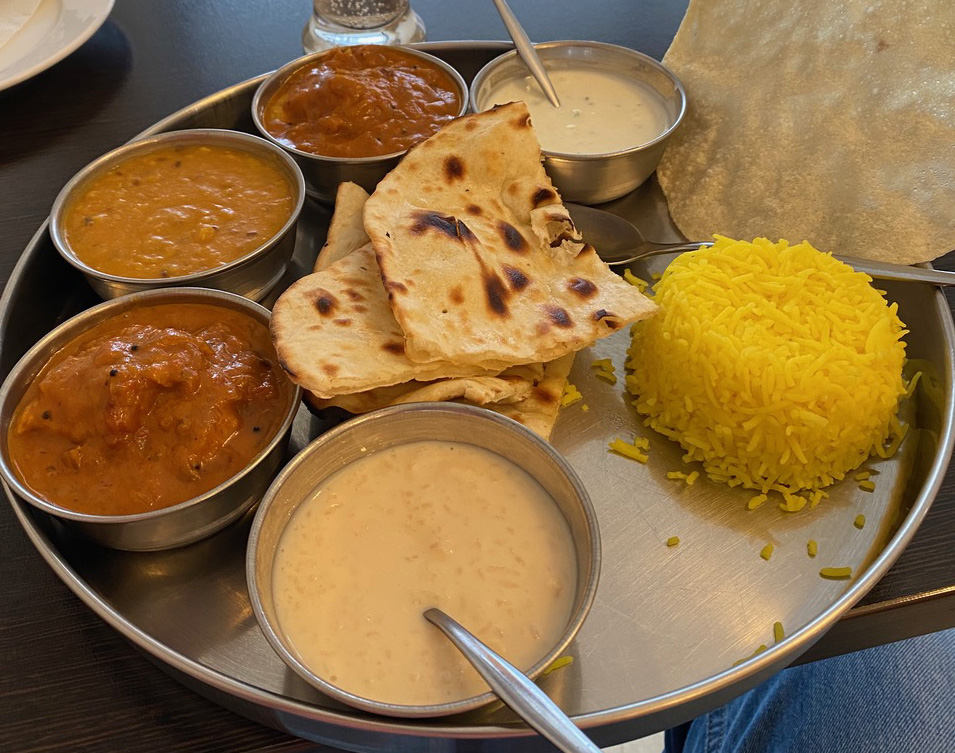
I love a good curry. Give me a masala dosa or a vegetarian thali, or an aloo gobi with a Goan fish curry, and we’ll be friends for life. My travels in India are among my fondest culinary memories. Eating food with fingers from palm leaves in vast halls, samosas with chai on railway platforms, long spicy fish lunches at beach huts in Kerala. Ah, but I digress. These are samples of the pungent taste that is the resonance of the Metal Element, tastes that are concentrated, distilled and bursting with an aromatic flavour. Herbs such as rosemary, thyme, cinnamon, nutmeg, cardamon, garlic and ginger are also in the realm of the pungent.

The season of Autumn is the best time to be adding warming, spicy, aromatic foods to our diet, for this pungent flavour supports the Metal Element and its organs of Lung and Large Intestine.

In the early autumn as the temperature and humidity drop, one should transition from the cooling foods of summer and the damp-clearing foods of late summer to neutral and yin-nourishing foods. As the autumn deepens and the weather gets colder, add warming spices and cruciferous vegetables to support the Metal Element. As the season dries, and especially in dry climates, add lung-moistening foods such as pears, pawpaw and honey.

Vegetables that support the Metal Element include radish, cauliflower, shitake mushrooms, sweet potato, parsnip, spinach, Brussels sprouts, pumpkin, leek, broccoli, fennel, onion, spring onions and chives.

Among the fruits, choose apple, tangerine, pear, golden kiwi, guava, persimmon, peach and fig.

Other foods that are supportive of the Metal Element are black sesame seeds, sesame oil, oats, red rice and black beans. For protein: tahini, silken tofu, duck, river fish and crab.

Pungent foods are said to move or disperse Qi, loosen stagnation and strengthen the Lung. This is especially useful when there is an invasion of pathogenic factors such as Wind or Cold. The pungent foods help to expel the invasion via the skin, often by sweating, and releasing to the exterior. The flavour can be used to protect against colds and flu, boosting immunity by stimulating defensive Qi. If, however, the Lung Qi is weak, then pungent food should be consumed in moderation as too much will scatter the Qi.

The Nei Jing tells us that “the pungent taste can ventilate the lungs and open the pores” but that “excessive consumption of the pungent taste may injure the pores and skin.” (Su Wen 5). Not only does too much pungent food injure the organs and tissues of its Metal Element, but it also has a flow-on effect on the Wood Element. “Overindulgence in pungent food can cause spasms, tremors, and poor nails.” (Su Wen 10) This is an example of an excess of the flavour of one Element acting on the grandson Element. In this case, Metal is invading the Wood.

Zoey Xinyi Gong in her Five Elements Cookbook warns that too much hot sauce, chilli etc can bring heat to the lungs (Metal) and liver (Wood), causing skin issues, hair loss, anger, restlessness and insomnia. It can also cause dryness in the Large Intestine leading to constipation. If you are prone to reaching for the 5-star hot sauce, you may therefore want to temper your usage. (Note to self!)

This blog post completes our year-long exploration of the foods of the Five Elements. Normally at this time I am already thinking of a new theme for the coming year. But for the first time, nothing has arisen and I wonder why. My first blog was posted in February 2014, just as the Wood Horse Year came galloping in. Here we are 12 years later in the Year of the Fire Horse, a year that promises change at all levels, so I am reassessing my blogging. Perhaps I’ll take a break, or perhaps I will post when the inspiration arises, rather than setting myself a timetable of blogging on a theme in each season. If, dear reader, you have read this far, I am humbled by your interest. If there is something you’d like to suggest for a topic, or even just to say hello, feel free to email me. My contact details are on the website.

With warm wishes

John

DRYNESS

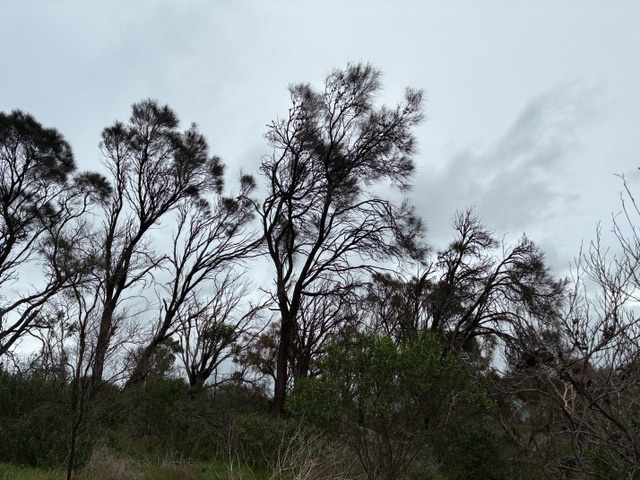
It is said that South Australia is the driest state in the driest continent. This year it is living up to the cliché as we shrivel through the driest drought conditions in 33 years. We are parched, withered, desiccated. Water tanks and dams are empty. Walking on my lawn sounds like someone is eating potato chips. Shrubs are dying. Gum trees drop crushing limbs. Throats are dry, coughs abound. My voice sounds to myself hollow and rasping.

As with the other climatic factors we have studied (cold, wind, heat and damp), dryness has a greater impact on those who are already dry within: those of a Metal constitution; those with existing imbalance in the organs of Metal, Lung and Large Intestine; and those in the Metal phase of life, the elderly.

The Chinese character for dryness is zao, comprising the radicals huo, meaning fire, and tsao, representing three birds singing in a tree. It seems to me they’re not singing, but rather panting with thirst, beaks open on a hot, dry day.

In northern China where the Five Element model was conceived, autumn is a dry season, as it is where I live. But that is not true of all locations. Just ask the folk in SE Queensland and northern New South Wales who have just suffered through a once in a generation cyclone. They received more rain in three days than we’ve had in 12 months. Nonetheless, most places experience dryness at some time of the year, and the pathogenic factor can also be experienced in overheated houses and workplaces, such as often occurs in Britain. The use of combustion stoves for heating also dries the air significantly. The resulting ills are the same as for nature’s dry.

The main symptoms of dryness are dry nose, throat and skin, all structures that are resonances of the Metal Element. These can appear as sinusitis, psoriasis, eczema, hoarse voice, thirst and a dry mouth. Respiratory illnesses such as asthma and bronchitis, fever and aversion to cold can also present. There is a corresponding deficiency of body fluids.

Coping with the effects of external dryness revolves around reversing the dry condition. Drink more water, of course, but do so in frequent, small sips. Bring more moisture into the air via a swamp cooler (evaporative) rather than an air conditioner, or a pan of water on a low stove. Dietarily, pears are good for moistening the lungs and happily are plentiful in autumn. Also good are apples, Asian pears, grapes and honey. A delicious, lung-moistening dessert is stewed pear and apple with honey. Soups are good for hydration. Walnuts, chestnuts, almonds and pine nuts in small quantities moisten the lungs. Stews of root vegetables such as sweet potato, parsnip, turnip, carrot are also beneficial.

Foods to avoid are those which are warming: coffee, ginger, garlic, cinnamon, alcohol and anything that is diuretic.

Acupressure Points to treat dryness of the lungs

Lung 9. The source point of Lung directly treats the organ and any lung condition. Located on the front of the wrist crease in a hollow below the thumb.

Lung 6. The xi-cleft point of Lung clears heat and moistens the lungs. Located on the forearm 7/12 of the distance between Lung 9 and the elbow crease.

Bladder 13. The shu point of Lung also harmonises the lungs. It is located in the upper back, two fingers width to the side of the spine at the level of the junction of 3rd & 4th thoracic vertebrae.

Large Intestine 11. Large Intestine is partner to Lung and this Earth point of the channel is famous for clearing heat from the body. Located in the large hollow at the outer end of the elbow crease.

I wish you well in the remaining weeks of autumn and as we drop down into the winter season.

This completes the cycle of articles on the climatic factors, and the 11th year of articles of this blog. In the winter I will begin another series about food, cooking and the Five Elements. Catch you then.

View of dry paddocks from Piney Ridge Road, Nairne in the Adelaide Hills