As we come to the end of a cold, wet winter in southern Australia, many minds are turning towards spring. Before we leave the winter and the Water Element, let’s have a look at a powerful spirit point of the Kidney meridian.
Lingxu – Spirit Burial Ground – Kidney 24
 The character Lingxu is made up of two parts, ling meaning spirit, and zu meaning an old burial ground or a wild wasteland. Ling depicts three shamans dancing, supplicating the spirits for rain.[i] The character for doctor or healer also contains the image of a shaman. All of this puts me in mind of Kaptchuk’s description of JR Worsley, father of the modern Five Element tradition, as the greatest shamanistic healer he had ever seen.[ii]
Worsley’s background predisposed him to regard healing as more than just working with the physical and emotional aspects of a person. His acupuncture work retained the aspects of spirit that were excised by the Chinese communists when they created what they called Traditional Chinese medicine (TCM) in the 1950s and 60s.
Most texts of TCM pay little regard to the esoteric aspects of the Kidney points of the upper chest, utilising them simply for physical conditions related to respiration, chest pain and vomiting. In the Five Element tradition, these points can be used to deeply touch a person at the level of spirit. Perhaps the most powerful of these is Lingxu – Spirit Burial Ground.
Lingxu, K 24, lies in the middle of a string of points that begins with K 22 Walking on the Verandah and ends with K 27 Store House. These points lie in the region of the heart and are a reminder of the significant relationships between Kidney and Heart, Water and Fire, jing and shen. K 22 is the exit point of the Kidney channel, where Qi moves to Heart Protector in the Wei Qi cycle. The remaining points on the meridian represent a mysterious journey of spirit into the darker regions of the human spiritual experience. “The spirit burial ground can appear as a dark foreboding place to those who have not cultivated the virtues of faith, wisdom and reverence for the will of heaven.”[iii]
One of the most profound uses of this point is to treat what is known as a spirit block. This is when the person’s spirit had become disconnected in some way from the bodymind. When it appears that a person’s spirit has died; when his life appears as a dry and barren landscape, lacking in direction and meaning; when the structures of the ego-self have obscured the True Self to such a degree that connection to True Nature has been lost, Lingxu has the capacity to restore a person’s connection to source.
The struggles of the spirit described here recall the notion of the dark night of the soul, first stated in a poem by 16th century Christian mystic John of the Cross. The main idea of the poem can be seen as the painful experience that people endure as they seek to grow in spiritual maturity and union with God. This journey through darkness to the spiritual light can be seen as an explication of these Kidney points of the chest, and of K 24 in particular.
In treating this point, the intention of the practitioner will determine the level of the client’s being that is addressed. If the practitioner uses the point with the intention of clearing a cough and improving breathing, the effects will be restricted to the physical level. There will be a very different effect when the intention is to revive a person’s spirit and his connection with the Tao.
[i] Ellis A, Wiseman N & Boss K, Grasping the Wind, Paradigm 1989, p. 380
[ii] Eckman P, In the Footsteps of the Yellow Emperor, Cypress 1996, p.173
[iii] Jarrett L, The Clinical Practice of Chinese Medicine, Spirit Path 2003, p. 452
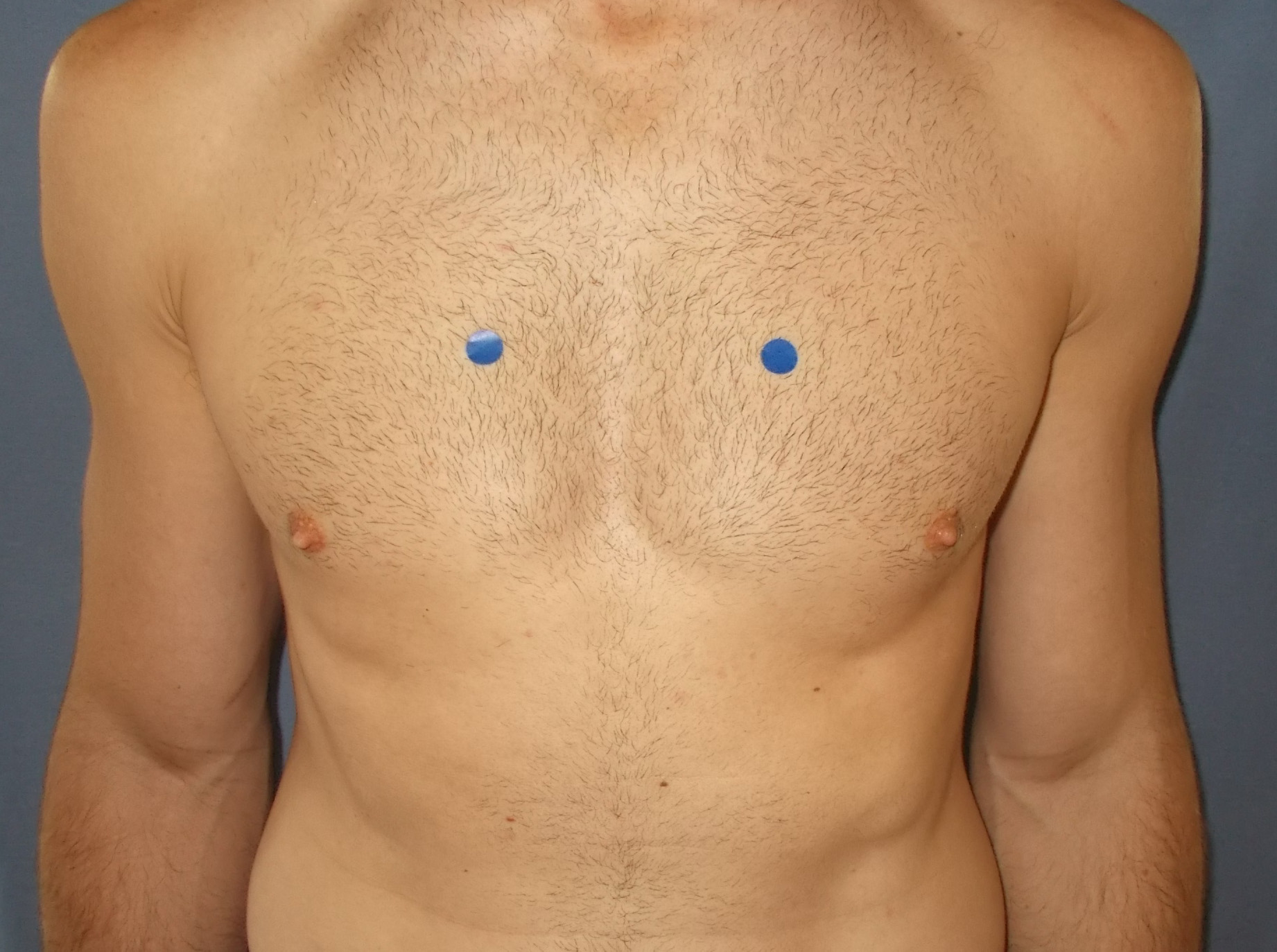 Location of Kidney 24
Located in the chest at the side of the sternum, the point lies in the third intercostal space and 2 cun lateral to the midline. Note that in males it is one rib space above the level of the nipple. Use direct, moderate pressure.
This is an extract from the forthcoming book ‘The Way of the Five Elements’ by John Kirkwood, Singing Dragon Press. Publication date November 21st, 2015. You can now pre-order this book at Fishpond, Book Depository and other online booksellers. (108 days to go!)