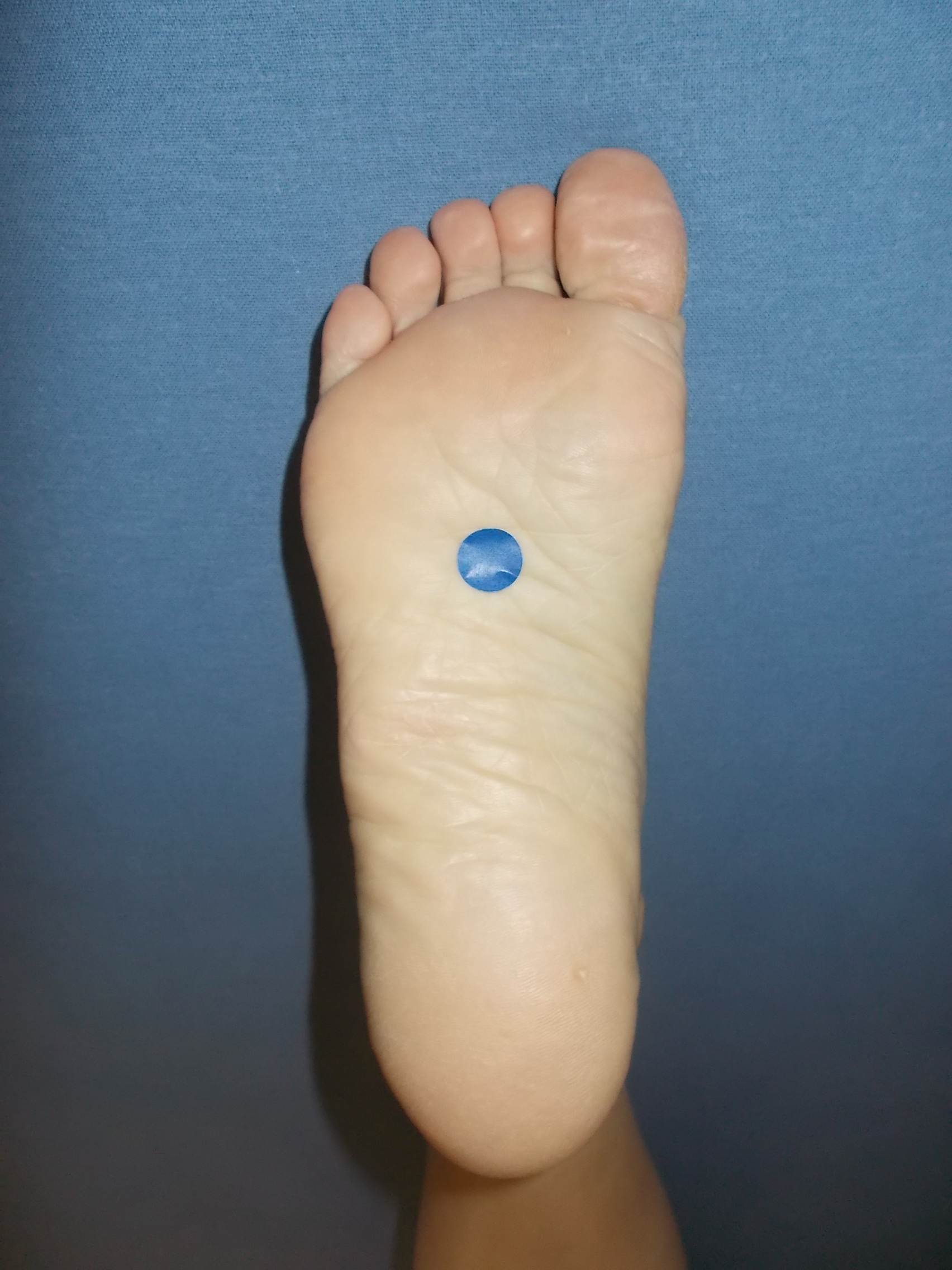
You may be wondering why on earth I’m introducing an Earth point at the start of the southern summer. It is because the Earth Element makes an appearance at each change of season, mediating the transition. In this case Earth eases us from spring to summer.
Gongsun – Grandfather Grandson – Spleen 4
 In our demanding, fast-paced, modern world, stress can produce tension in the organs and tissues of the abdomen, affecting digestion and elimination as well as the reproductive organs.
In Gongsun – Grandfather Grandson we find a point that acts upon the abdomen in multiple ways. It is a powerful point of the Spleen channel and the luo-connecting point of that meridian. And it is the master point of the Chong Mai (Penetrating Vessel) which influences the whole of the abdomen and all its organs.
Its name alone alerts us to its prominence in the pantheon of points. Gongsun was the family name of the legendary Yellow Emperor Huang Di whose conversations with his physicians form the basis of the Neijing, that towering classic of Taoism and Chinese medicine. The translation of Grandfather Grandson suggests continuity through the generations, while at a mundane level using the analogy of the grandson for the connecting channel, offshoot of its grandfather, the main Spleen channel.
Yellow is the colour of Earth and the Yellow Emperor was said to have ruled during the Earth phase of China’s history. His reign laid the foundations for Chinese civilization in the same way that the Earth Element is the base and orientation of all the other Elements.
Whichever explanation of the name we wish to take, Gongsun is a potent point for influencing the Earth Element and its organs of Stomach and Spleen. It is particularly effective in combination with ST 40, the luo-connecting point of Stomach meridian. By activating the Spleen it treats lethargy, fatigue, chronic tiredness and weakness.
Like other connecting points of the yin meridians, SP 4 exerts a pronounced influence over the emotions. Because of Spleen’s connection to the Heart, SP 4 can settle the spirit when there is restlessness, agitation, insomnia, mania and depression. The point also addresses an imbalance of sympathy, where a person suffers self-pity and feels unsupported by others and by the world at large, or relies too heavily on others to meet their needs.
Already we can see that Gongsun is an influential point. But there is more. Another of its roles is as master point of the Chong Mai (Penetrating Vessel), one of the Eight Extraordinary Vessels. The Vessels are fields of Qi as opposed to the rivers of Qi that are the meridians. Gongsun exerts an influence over the entire field of the Penetrating Vessel which extends throughout the torso from the pubis to the throat and includes the spinal column and the insides of the legs. The Penetrating Vessel is described as both the sea of blood and the sea of the meridians. It therefore exerts a strong regulating effect on Blood and Qi.
As the master point of the sea of blood, SP 4 regulates blood circulation, stops bleeding and addresses all menstrual irregularities. It has an influence on the uterus and treats gynaecological disorders such as endometriosis, fibroids and cysts.
As the master point of the sea of the meridians, it ensures good circulation of Qi throughout the 12 meridians. It addresses counter-flow Qi, for example where Stomach Qi is rising rather than descending and causing chest or gastric pain.
It is believed that the Extraordinary Vessels develop at conception and form the basis of the energy network of the body, well before the development of the 12 organ meridians. Treating the Vessels therefore treats the depth and foundation of who we are as humans
Spend some time with Gongsun and become master of your own inner seas.
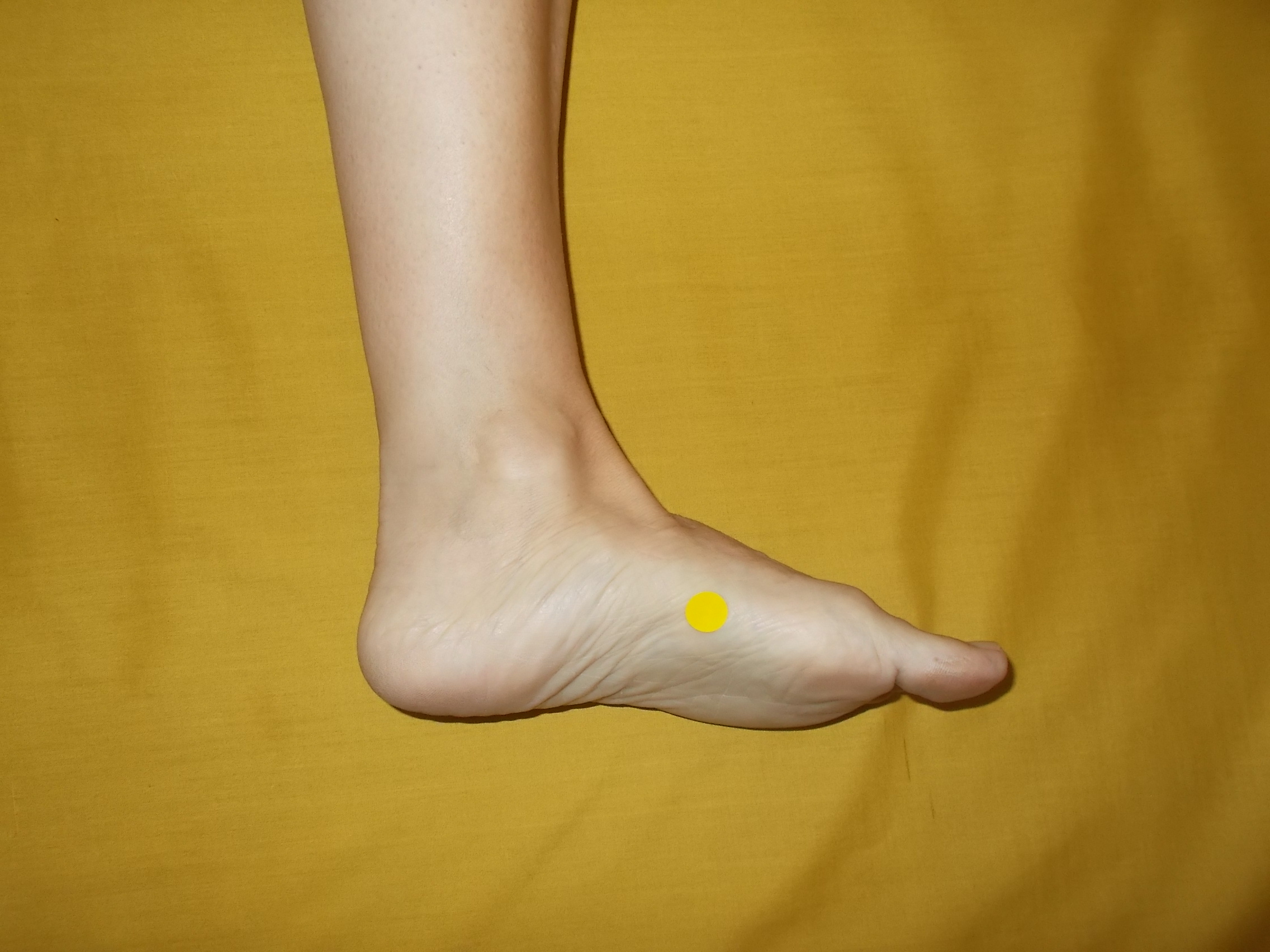 Location of Spleen 4
In the arch of the foot, in a depression at the base of the first metatarsal bone. Find Spleen 3 in a depression at the ball of the toe, then slide your finger up the shaft of the metatarsal until you are at the base of the bone. Apply firm pressure directed towards the ankle.

This is an extract from John’s book ‘The Way of the Five Elements’ published by Singing Dragon Press and now available from discerning booksellers.