All posts by john@acupressure.com.au

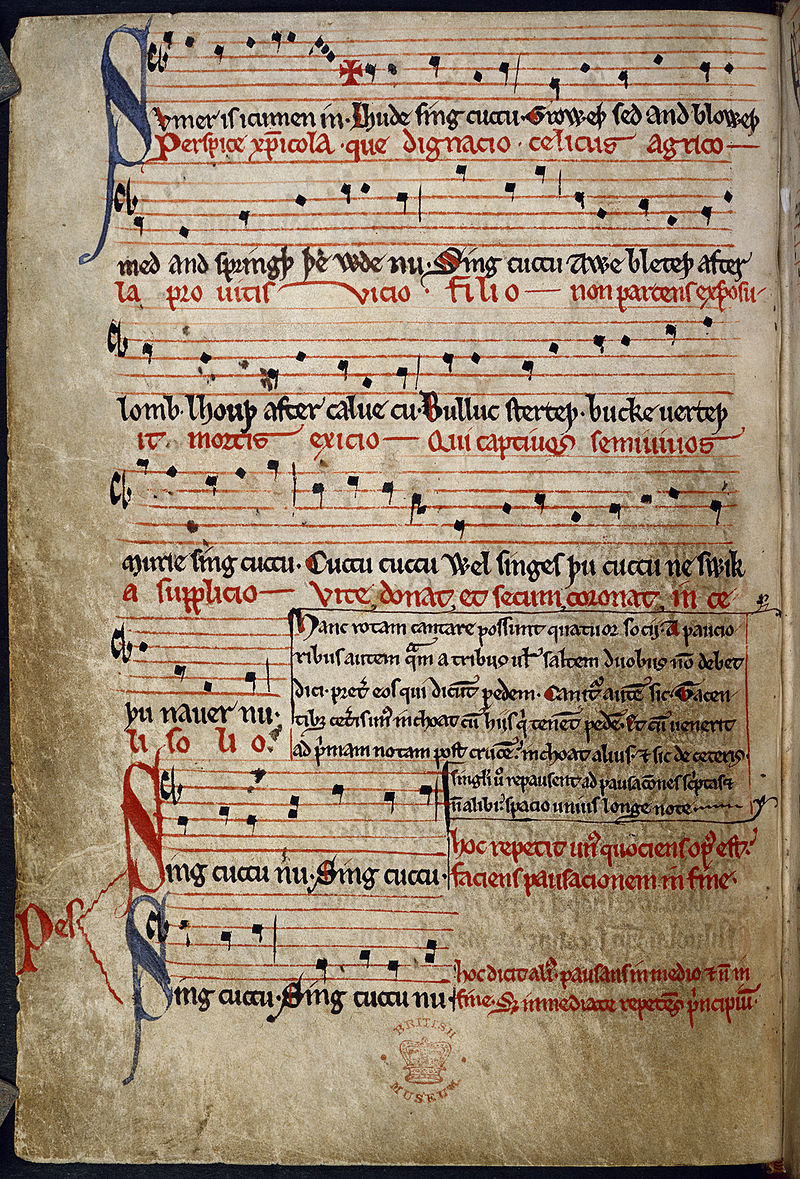
Sumer is icumen in

sumer-is-icumen-inThis bright, jolly, 13th century rota sings gaily about the arrival of summer. Its four part harmony is popping with the joy of the season. There are blooming meadows, merrily singing cuckoos, prancing bullocks and farting goats. The song evokes many of the qualities of summer and the Fire Element: expansiveness, joy, expressive movement and an overall outward orientation. You can listen to it here.

The first notes of summer in the southern hemisphere are usually seen around the midpoint between the spring equinox and the summer solstice, about November 6th. The days are long and becoming longer, the temperatures warm and getting warmer, the sun bright and growing brighter by the day.

This year, however, there has been an abnormally cold and wet start to summer in southern Australia. I’m reminded of the jape about the English weather, that the main difference between winter and summer in England is the temperature of the rain.

Last weekend I taught a Fire Element workshop in which we invited the energies of Fire to fill the room so that we could immerse ourselves in a Fire bath. It was an unseasonably cold and wet day and it took a while to turn up the flame. In one spontaneous moment, I invited everyone in the group to spread their arms out wide, a gesture often associated with joy. As we all spread our arms out, I noticed that smiles broke out on everyone’s face. I didn’t even need to bring out the silly rubber chickens to get people smiling.

As we open our arms, we open our hearts. Through this posture, we can access the contented joy that is the natural state of the heart. And since the fundamental movement of Fire is outwards, joy flows naturally out into the world. What is more, this arms-wide-open stance also invites the world in.

I’m going to make it a practice this summer to open my arms out wide at least once a day.

I invite you to join me.

joy-copy

Rising Above Life’s Tears

Toulinqi – Head Above Tears – Gall Bladder 15

above-tearsSoon this long, cold, wet spring will transition to summer. Time for one last Wood point before we move on to the Fire Element.

Toulinqi is a point that is regarded quite differently in the Five Element tradition when compared to the TCM tradition. TCM practitioners regard this as a minor point and little used. When it is utilised, it is for headache, nasal congestion, eye pain, tearing or lack of tearing. It helps to dispel wind that has invaded the body.

In the Five Element tradition it is more often used to address mental and emotional conditions. Recently I used this point on a client who was feeling confused and lacked mental clarity. As I held the two points, which lie just inside the hairline above the eyes, I had the sense that the client’s eyes were rising up her forehead to meet my fingers. This strange notion was validated when I read that Toulinqi  helps a person to get a better sense of perspective, to see further and more widely in the context of her life. If your eyes were to rise up into your hairline, you’d certainly be able to see further!

Head Above Tears is one translation of Toulinqi. Others include Head Overlooking Tears, Head Governor of Tears, Head Before Crying, and Treating Tears. While eyes watering from the wind is certainly one use of the point, it can also be used where a person has difficulty crying, or where frustration has become so extreme as to burst into tears. Readers may remember that last spring we looked at a point in the foot named Foot Above Tears. This can be used to drain excess Qi from the Gall Bladder meridian and to relieve frustration and headache. Head Above Tears is its natural partner and the two can be treated at the same time.

The Gall Bladder Official’s job is to make decisions and to take action in the world. Where there is strong moving back and forth between highs and lows, action and inaction, elation and despair, this point is called for. It helps a person who is tense and uptight, inflexible and only able to see a single course of action.

Dizziness and visual disturbance can sometimes be the result of a difference between our inner and outer reality. When there is a disconnect between inner vision and outer vision. Toulinqi helps to reconcile these differences.

Gall Bladder 15 can give us a wider perspective on life, allowing us to make better sense of its patterns, to rise above the tangled thickets of our inner confusion and to see the bigger picture of our place in the cosmos.

Location of Gall Bladder 15

gb-15


Directly above the pupil when the eye is looking forward, and 0.5 cun inside the hairline.