Tag Archives: pungent

AUTUMN FOOD

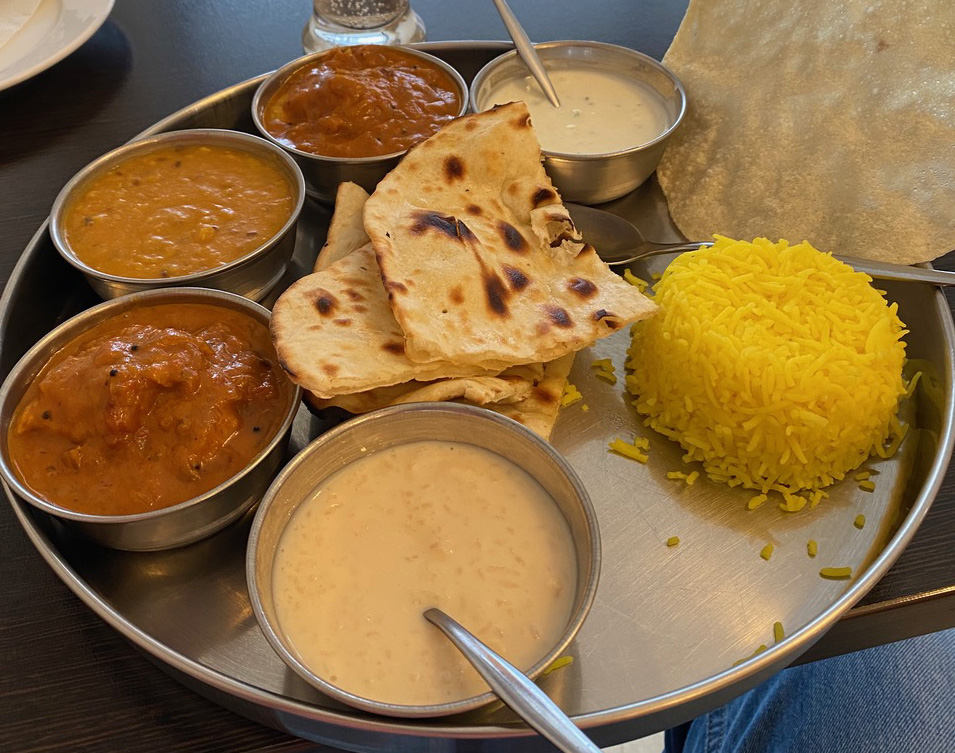
I love a good curry. Give me a masala dosa or a vegetarian thali, or an aloo gobi with a Goan fish curry, and we’ll be friends for life. My travels in India are among my fondest culinary memories. Eating food with fingers from palm leaves in vast halls, samosas with chai on railway platforms, long spicy fish lunches at beach huts in Kerala. Ah, but I digress. These are samples of the pungent taste that is the resonance of the Metal Element, tastes that are concentrated, distilled and bursting with an aromatic flavour. Herbs such as rosemary, thyme, cinnamon, nutmeg, cardamon, garlic and ginger are also in the realm of the pungent.

The season of Autumn is the best time to be adding warming, spicy, aromatic foods to our diet, for this pungent flavour supports the Metal Element and its organs of Lung and Large Intestine.

In the early autumn as the temperature and humidity drop, one should transition from the cooling foods of summer and the damp-clearing foods of late summer to neutral and yin-nourishing foods. As the autumn deepens and the weather gets colder, add warming spices and cruciferous vegetables to support the Metal Element. As the season dries, and especially in dry climates, add lung-moistening foods such as pears, pawpaw and honey.

Vegetables that support the Metal Element include radish, cauliflower, shitake mushrooms, sweet potato, parsnip, spinach, Brussels sprouts, pumpkin, leek, broccoli, fennel, onion, spring onions and chives.

Among the fruits, choose apple, tangerine, pear, golden kiwi, guava, persimmon, peach and fig.

Other foods that are supportive of the Metal Element are black sesame seeds, sesame oil, oats, red rice and black beans. For protein: tahini, silken tofu, duck, river fish and crab.

Pungent foods are said to move or disperse Qi, loosen stagnation and strengthen the Lung. This is especially useful when there is an invasion of pathogenic factors such as Wind or Cold. The pungent foods help to expel the invasion via the skin, often by sweating, and releasing to the exterior. The flavour can be used to protect against colds and flu, boosting immunity by stimulating defensive Qi. If, however, the Lung Qi is weak, then pungent food should be consumed in moderation as too much will scatter the Qi.

The Nei Jing tells us that “the pungent taste can ventilate the lungs and open the pores” but that “excessive consumption of the pungent taste may injure the pores and skin.” (Su Wen 5). Not only does too much pungent food injure the organs and tissues of its Metal Element, but it also has a flow-on effect on the Wood Element. “Overindulgence in pungent food can cause spasms, tremors, and poor nails.” (Su Wen 10) This is an example of an excess of the flavour of one Element acting on the grandson Element. In this case, Metal is invading the Wood.

Zoey Xinyi Gong in her Five Elements Cookbook warns that too much hot sauce, chilli etc can bring heat to the lungs (Metal) and liver (Wood), causing skin issues, hair loss, anger, restlessness and insomnia. It can also cause dryness in the Large Intestine leading to constipation. If you are prone to reaching for the 5-star hot sauce, you may therefore want to temper your usage. (Note to self!)

This blog post completes our year-long exploration of the foods of the Five Elements. Normally at this time I am already thinking of a new theme for the coming year. But for the first time, nothing has arisen and I wonder why. My first blog was posted in February 2014, just as the Wood Horse Year came galloping in. Here we are 12 years later in the Year of the Fire Horse, a year that promises change at all levels, so I am reassessing my blogging. Perhaps I’ll take a break, or perhaps I will post when the inspiration arises, rather than setting myself a timetable of blogging on a theme in each season. If, dear reader, you have read this far, I am humbled by your interest. If there is something you’d like to suggest for a topic, or even just to say hello, feel free to email me. My contact details are on the website.

With warm wishes

John

Taste of Earth

The arrival of the Late Summer season has me thinking of food. To be honest, I think about food in every season and several times a day. But the Earth season is particularly evocative of the sense of taste. Just look at all the wonderful harvest of fruit that appears in the markets at this time of year. Cherries, nectarines, peaches, melons, berries, apples, pears and more. A cornucopia of soft, sweet yumminess. To say nothing of the groaning tables of fresh vegetables at the Farmers Markets. Just thinking of it has me salivating.

While filming for the Earth video recently, I took a tour of the Adelaide Farmers Market and sampled all of the many different flavours on offer, thinking while tasting of the associations of each of the Elements. As I bit into a juicy Kalamata olive, the salty flavour evoked the Water Element of the sea from which our distant ancestors emerged. The sour taste of a grapefruit evoked the sharpness and directness of the Wood Element. The bitter flavour of dark chocolate gave a taste of the Fire Element as well as a caffeine charge to fuel its activity. The sweetness of all the fruits brought a roundness to the mouth that captured the Earth Element’s sweet character. And the pungent flavour of a spicy pie brought forth the Metal Element’s characteristics of concentration and distillation.

Much Asian cooking pays close attention to the balance of these five flavours in a meal. When the five flavours are in balance and harmony, we are accessing the very nature of the Five Elements and the harmonious interplay of their vibrations.

We can use this information about the five tastes in a number of ways.

You can begin by examining your food choices to see if any of the flavours are missing from your diet. If you notice, say, that you don’t have much sour food in your diet, you could start adding cider vinegar to soups or salad dressings,  putting a spoonful of sauerkraut on the side, taking lemon juice in water or adding slices of lime to drinks.

Notice if you have an aversion to a particular flavour which you exclude from your diet altogether. This may indicate an imbalance in the corresponding Element. For example an aversion to bitter foods may be telling you that your Fire Element is out of balance. Perhaps find some bitter foods that can be added to your food so you are not overwhelmed by the flavour on its own.

Also notice if there is a flavour which you crave. There is a clinical anecdote of a Polish man who habitually added a whole cup of vinegar to a bowl borscht soup, clearly signalling an imbalance in his Wood. Many people are addicted to sugar which is highly detrimental to the Spleen organ of the Earth Element. If this is you, try to substitute refined sugars with naturally occurring sugars in whole fruits and vegetables.

For me, the coolest use of the five tastes is found in the operation of the Five Element control (ke) cycle. In this cycle, each Element controls or restrains the Element that is the grandson, i.e. two positions ahead. Water controls Fire, Fire controls Metal, Metal controls Wood, Wood controls Earth and Earth controls Metal. If we look at the corresponding tastes, we find that the same principle applies in a very practical culinary way. Salt will control bitter in the way that the bitterness of eggplant is removed by rubbing salt into it. A bitter food will tame a dish that is too spicy. If your curry is too hot, grate some dark chocolate into it. A pungent herb or spice will control the tartness of sour tastes like citrus or vinegar. In turn, a sour flavour will make palatable a food that is sickly sweet. And finally a sweet flavour will overcome too much salt. This is a well-known strategy of food processors who use salt to preserve the food, then sugar to mask the salty flavour.

Next time you find that your pot of soup, stir-fry or other meal has one flavour that is overpowering the others, while you can’t remove the flavour, you can add another flavour to control it. Try it!

Check this table which lists some of the foods that correspond to each of the five tastes.

TASTE ELEMENT FOODS
Salty Water Sea salt, miso, soy sauce, tamari, seaweed, dulse, arame
Sour Wood Citrus, cider vinegar, pickled/fermented vegetables, sauerkraut
Bitter Fire Cos lettuce, bitter greens, chicory, dandelion, citrus peel, dark unsweetened chocolate, tonic water, coffee
Sweet Earth Most fruits, pumpkin, carrot, sweet corn, rice, potato, cabbage, tomato, beets, almonds, walnuts, chicken
Pungent Metal Garlic, onion, spices such as turmeric, cloves, cinnamon, chilli; strong herbs such as rosemary, basil, fennel

One final use of the control cycle is in the case of overconsumption of certain flavours. When an excess of a flavour is consumed, it impacts upon the organ of the Element it controls, namely its grandson:

Too much salt injures the Heart.

Too much bitterness injures the Lung

Too much pungency injures the Liver

Too much sourness injures the Spleen

Too much sweetness injures the Kidney

Therefore be balanced in all of your consumption. The Elements and organs of your bodymind will sing harmoniously in gratitude.

Bon appétit.