Yongquan – Bubbling Spring – Kidney 1
 In 2009 I began publishing a newsletter about the Five Elements. The idea for this just bubbled up one day, like a spring suddenly appearing on a hillside. When casting about for a title for the publication, this too just sprang to mind in the most effortless way. I called it Bubbling Spring after the first point of the Kidney meridian. And like a perennial spring, this quinterly newsletter pushed its way up, insisting on its publication through four years and 19 issues until it began to morph into a book.*
This feeling of something bubbling up irrepressibly from within gave me a direct experience of the nature of the Water Element. Water is the most yin of the Elements but it is not passive. It offers us access to power that comes from true will, wisdom that is borne of stillness, knowing that arises from not knowing.
Yongquan – Bubbling Spring is the only acu-point on the sole of the foot, the lowest and most yin part of the body which is in continual contact with the yin energy of the earth.
It can therefore be used as a portal through which we can visualise drawing upon the energy of the earth as a tree’s roots draw nourishment from the soil. This image of the tree is quite appropriate here since this is the Wood point of the Kidney meridian, one which empowers growth and development to reach our fullest potential.
When a person lacks stamina, strength, will or perseverance, Yongquan can help him to draw on reserves in order to get a kick-start. It can restore consciousness and is called for when someone has fainted. On the other hand, it can be used when energy rises aggressively and unrestrainedly, producing conditions such as dizziness, headache at the top of the head, confusion, impaired vision, nosebleed and hypertension.
One of the most important relationships in the body is between the Kidneys and the Heart. The Kidneys nourish the Heart while the Heart warms the Kidneys. Harmony between the two is one of the main requirements for a peaceful spirit. Therefore imbalance between Kidneys and Heart is a cause of a range of emotional disorders including anxiety, mania, agitation, restlessness and surges of anger and rage. Yongquan treats these conditions by calming the mind and clearing the brain.
It is a very grounding point and can be massaged at bedtime in order to stave off insomnia. Putting your feet in a bowl of warm water for 15 minutes is a wonderful way to bring on sleep.
Yongquan is good for disorders brought on by menopause, including hot flushes, night sweats, anxiety and headache. It also helps Water related issues such as oedema, infertility and poor memory.
As the Wood point on a Water meridian, this is the sedation point of Kidney and as such moves Qi from Water to Wood around the sheng cycle. This is what gives it its power of resurgence. However, the Kidney Qi is rarely, if ever, in excess, and so this point must not be overused lest the reserves of Kidney Qi be depleted.
If you want to put a spring in your step or draw strength from the well of the Water Element; or if you feel exhausted by effort and want to contact your true will, dip your cup in the Bubbling Spring.
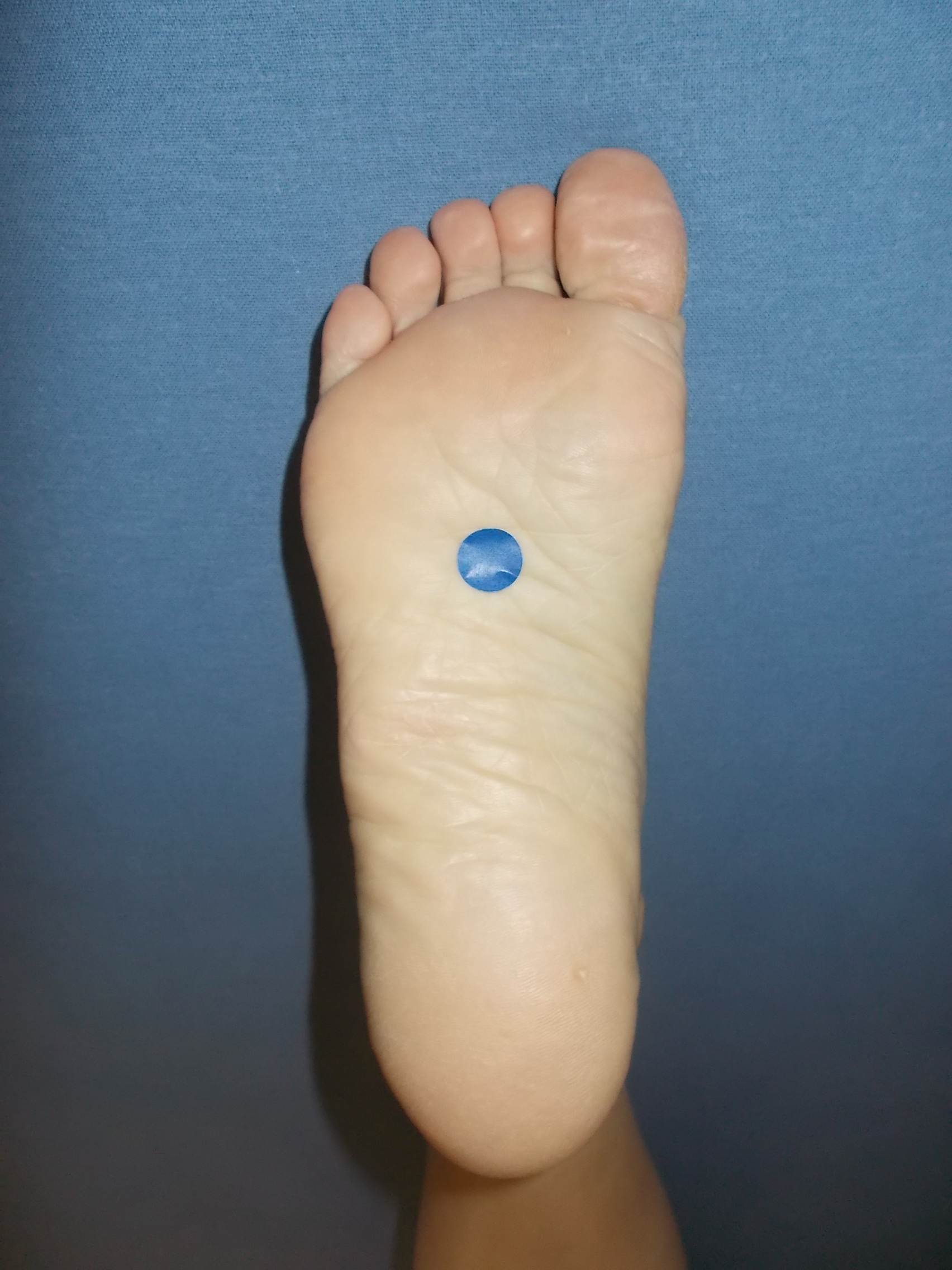
Location of Kidney 1
On the sole of the foot, the point lies in the depression that appears when the toes are curled. Locate between the second and third metatarsals, about one third of the distance between the base of the second toe and the heel.
* Newsletters are archived at http://www.acupressure.com.au/newsletter_archive.html
This is an extract from ‘The Way of the Five Elements’ by John Kirkwood, to be published by Singing Dragon Press (an imprint of Jessica Kingsley Publishing) in November 2015.