Ex rock star and pin-up physicist Brian Cox is making headlines in Australia again. Crossing swords with a climate sceptic on Q&A, speaking at a conference during Science week, and starring in the television series Forces of Nature on ABC. I’m a bit of a fan of this lad from Oldham who grew up just three miles down the road from where I was born. But I was particularly touched this week by something he said in Forces of Nature. Speaking about a fisher family in Greenland in relation to the seasons, Cox observed,
‘Our planet’s motion leads to something beyond the shifts in the thickness of the ice and the lengths of the days. It’s reflected in the ever deepening relationship between father and son.’
This led me to reflect again on the profound influence that the seasons have on us at all levels. I was reminded that the fact that we have seasons at all derives from a cosmic accident that changed the Earth
Not long after the Earth formed about 4.5 billion years ago, a planet the size of Mars crashed into it in a glancing collision, throwing rocks and debris thousands of miles into space. Over time, those rocks coalesced to form the Moon. The collision had a dramatic and lasting effect upon the Earth because it tilted the axis of rotation by 23.5 degrees. Now as the Earth orbits the sun, at some points the northern hemisphere points towards the sun and at others it points away from the sun, creating alternating periods of heat and cold, light and dark, indeed of yin and yang.
This random event in the distant past has shaped the character of our planet ever since. And we experience its legacy every day. These spins and orbits have had a deeper effect because they are an essential part of the stage upon which life evolved. The plants and animals that have evolved have done so in response to this celestial clockwork.
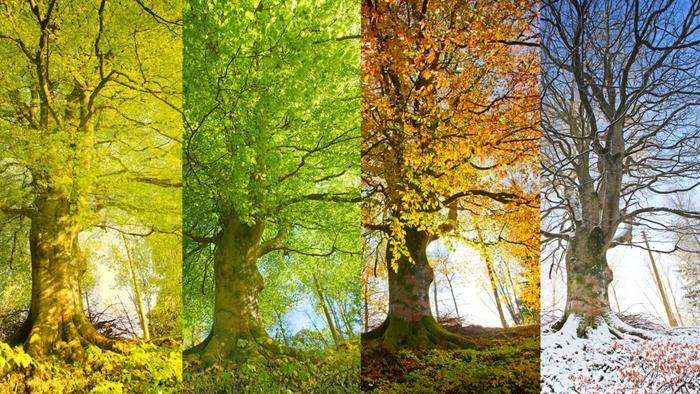
The seasons offer us continual annual changes to which we must respond. Each season provides its particular characteristics that shape our activities, our sleeping and eating patterns, our moods and emotions, and above all our relationships. We relate to the Earth in her changing moods, and we relate to other people in the context of these seasonal changes.
All of this completely underpins the Five Element model that guides my work and my life, and about which I write in these columns. It astounds me that the whole course of human history, indeed the trajectory of all of life on Earth was determined by an ancient planetary crash and a 23 degree tilt.
As we move into the season of spring in the southern hemisphere, we begin pointing more towards the sun. While if you live in the northern hemisphere, you are moving into late summer and autumn because you are beginning to point away from the sun.
As the seasons change, I invite you to reflect on your relationship to the Earth, its animals and plants; and also to reflect on your relationship to others and how this is influenced by the changing season. How are these changes shaping the very humanness of your being?
Some of the material in this blog has been quoted from Episode 2 of ‘Forces of Nature with Brian Cox’. The series is currently showing on ABC and available on iView.