Monday 31st August 2026
Early Spring
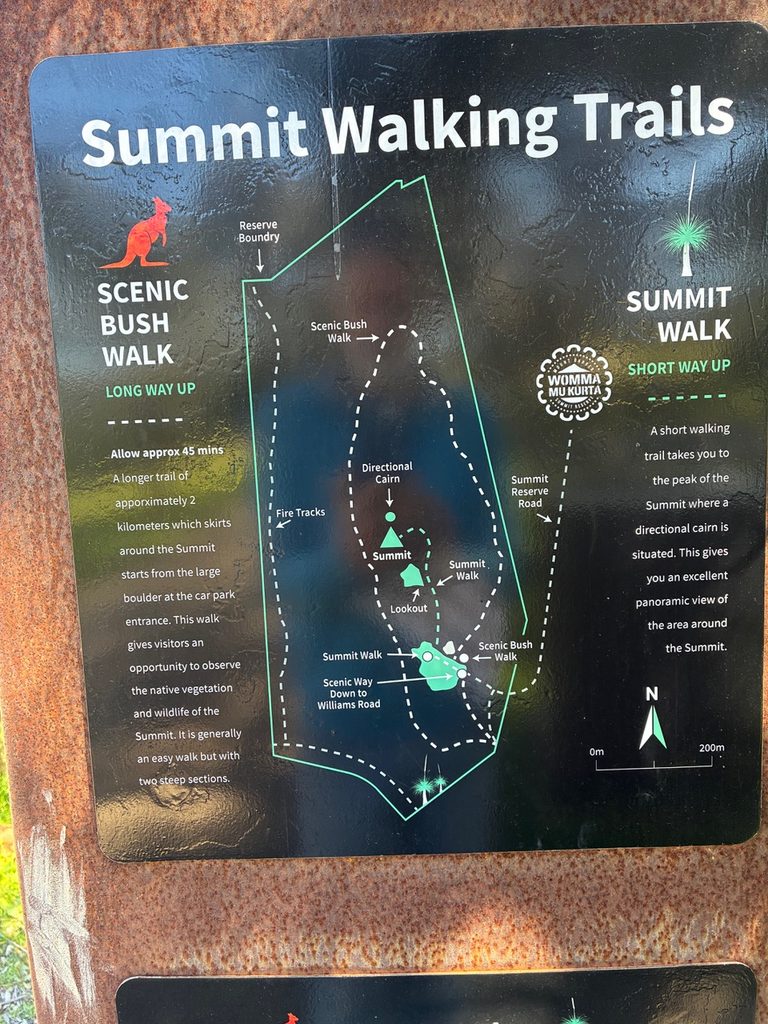
Mount Barker Summit – Womma Mu Kurta
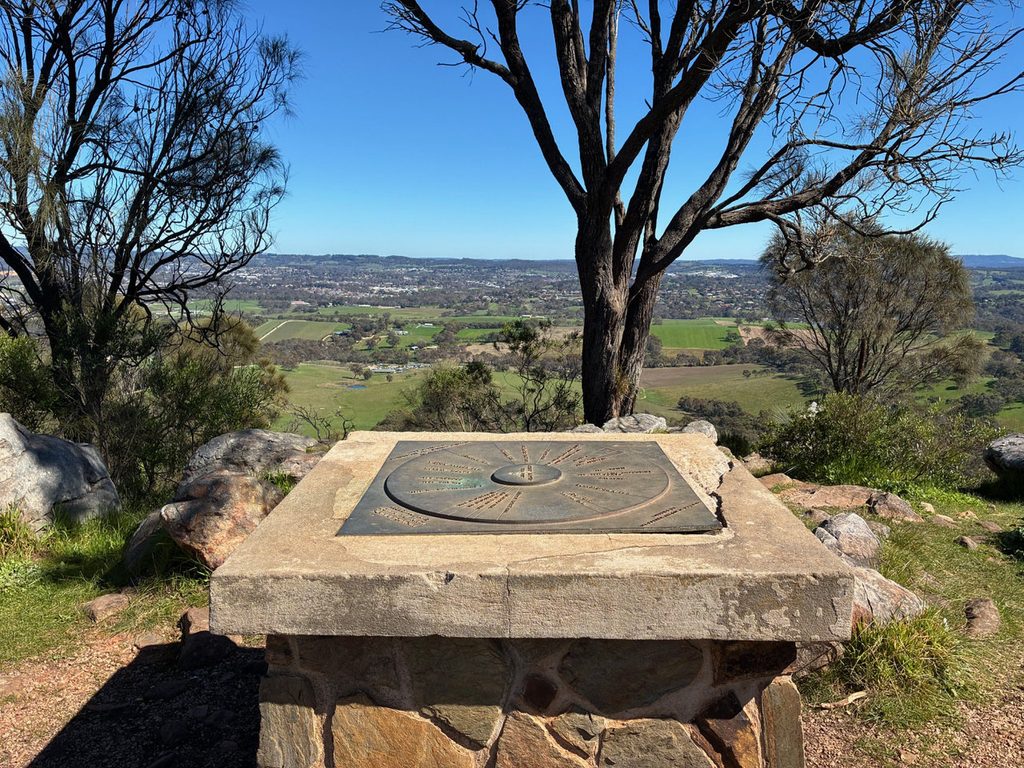
It is three months since I last drove up the rutted track to the summit. Time to see what has changed. Today is comfortably warm and sunny, prompting outer and inner smiles. In the spirit of the Wood Element of the season, I am on a mission. Armed with a printout from Green Adelaide’s ‘Common native orchids of the Adelaide Hills’, I’m on a private treasure hunt to find as many as I can.
First, I take the short trail to the trig point which gives a clear, panoramic view of the surrounding district. Mount Lofty to the north-west seems so close but the old metal plaque on the cairn reveals it is 21.5 miles away (34.6 km). To the south-east, further still, I can see the sun glinting on the waters of Lake Alexandrina and at the edge of vision, the dunes of the Coorong. Such wide vision engenders a sense of expansiveness, raising the spirits and imbuing me with optimism.
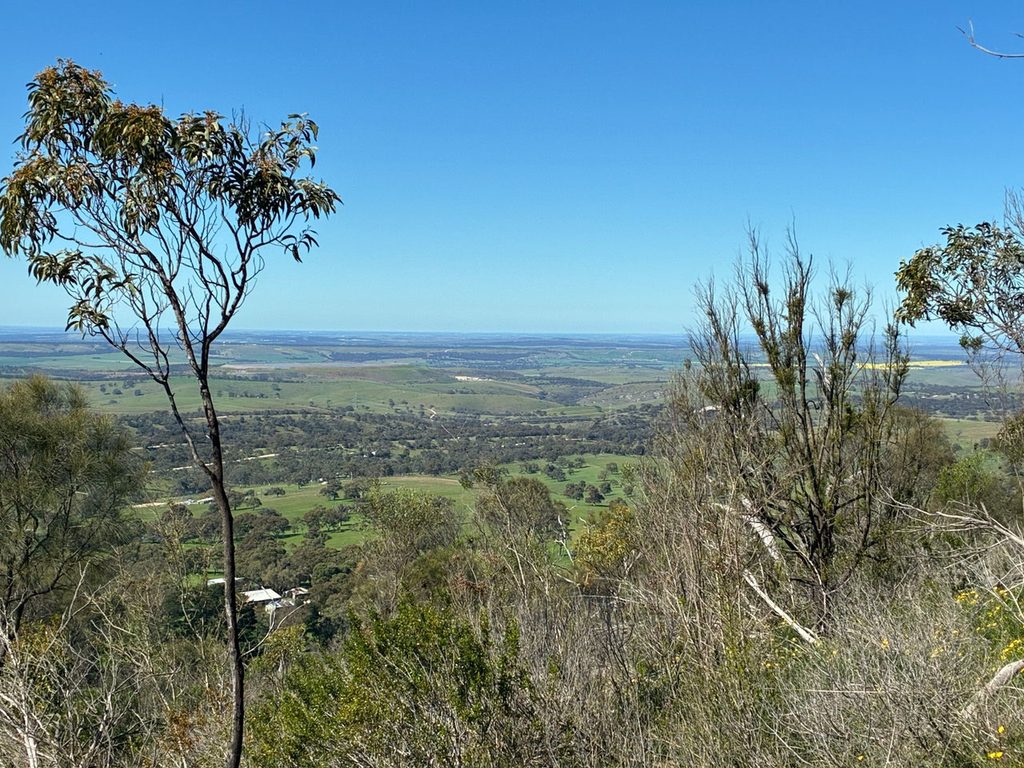
Tearing myself away from these views, I head back down to rejoin the main track around the summit that I trod in the winter. This time the sky is clear and blue, the sun warm on my skin, the ground dry underfoot. Last season I walked hurriedly huddled in my jacket; today I want to linger and savour everything the land has to offer. This suits my mission as I hunt for the elusive orchids.
Here is my first flower find: a pink-tinged white flower, but, hmm there are loads of them. I take a photo and identify it as kind of freesia. Or iris. It becomes clear that I am no botanist.
Ambling along the eastern edge of the ridge, scanning left and right, I find another candidate, a tall, pencil-like flower with small purple flowers with smaller yellow centres. It does not fit any of the images on my identification sheet. And again, there are many more examples. Another strike.
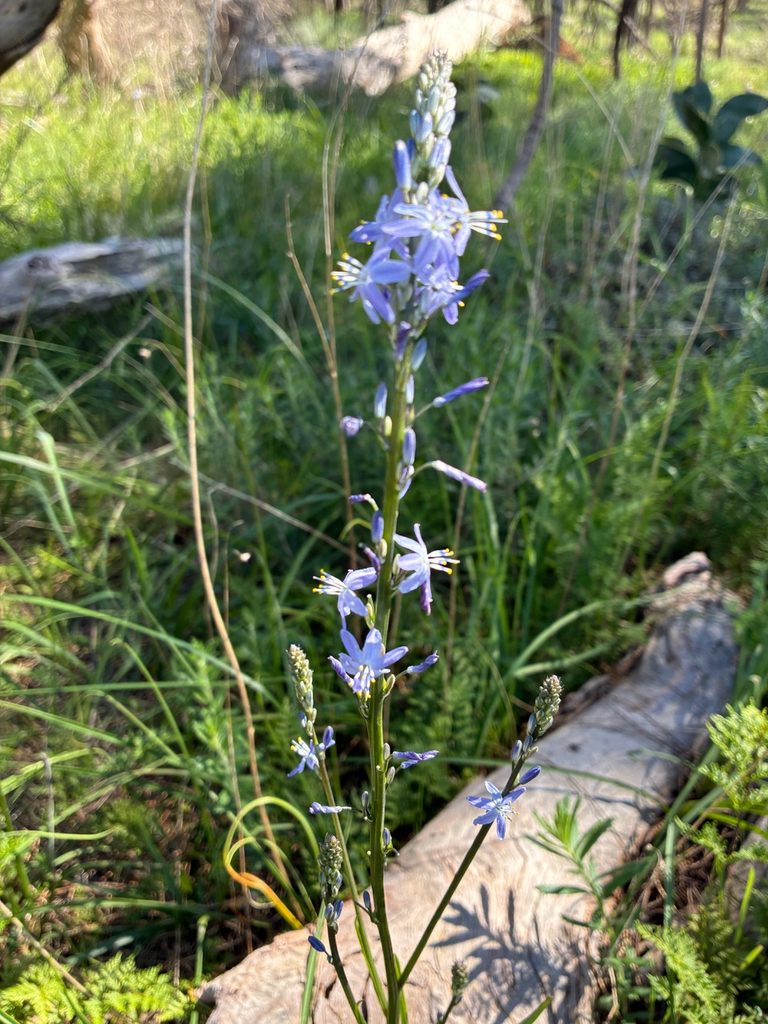
A gorgeous pink six-petalled flower turns out to be onion grass; a white beauty is completely unidentifiable; another purple one might be a kind of… I begin to realise that AI is not set up for plants in the Adelaide Hills. A subtle sense of disappointment and frustration creeps in: my mission has been unsuccessful. I recognise the feeling as a minor expression on the anger spectrum. And yet, I have seen an abundance of beautiful wildflowers! In not finding what I’ve been looking for, I haven’t really appreciated what I have seen. Bound by my tunnel-visioned mission, I have missed the wider picture. Such a lesson of the Wood Element.
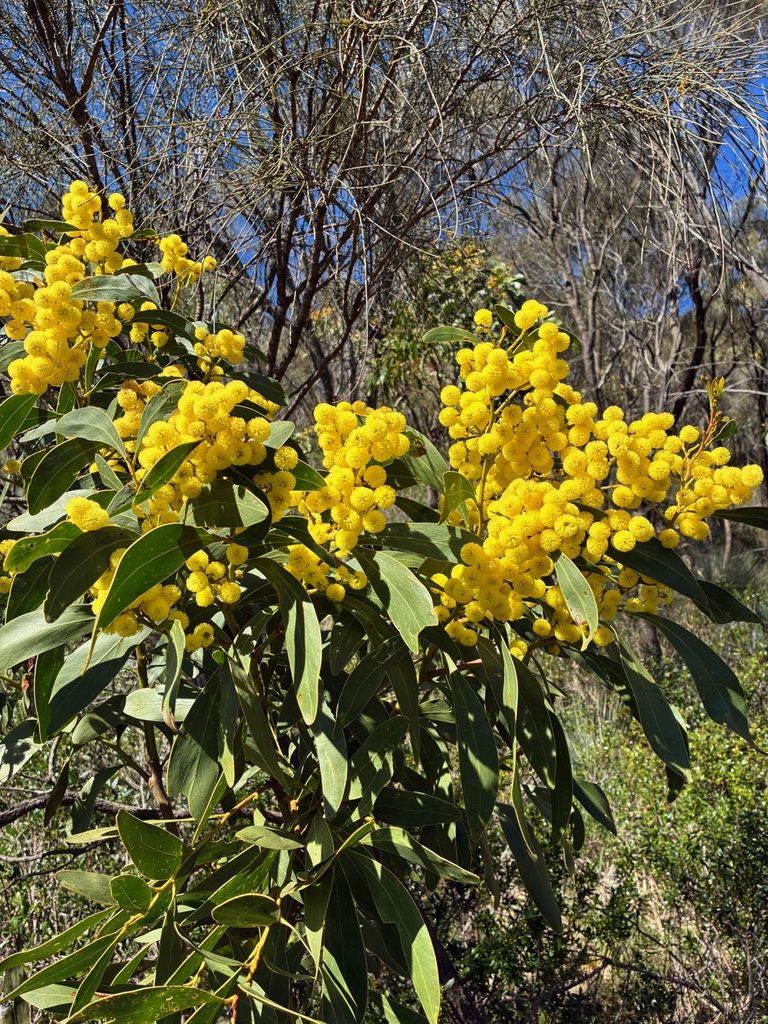
Letting go, I continue in a lighter and more open frame of mind. I reach the northern end of the loop and turn onto the western slope. This was very cold and windy last time; today it is balmy and inviting. The tree canopy is denser on this side and I notice there are far fewer flowers. They peek out from open pockets of sunshine. Rounding a corner, there is a blaze of yellow bubbles from a wattle over-reaching the path. It is gorgeous, rich, bursting with yellowness. It doesn’t need a name or a label. Letting go of labelling somehow allows a fuller appreciation of its beauty. Reminds me of how we label people and thereby fail to see their uniqueness.
The last leg of the circuit is a steep climb up high steps strewn with rocks. Now I am hot and take off my sweatshirt which today is living up to its name. Just before I get back to the carpark, there is a profusion of wildflowers in the scrub by the path. Nameless and heart-liftingly beautiful.
Back home I do some research and discover that the orchids most likely to appear at Mount Barker Summit in September are Donkey Orchids, Pink Fingers, King Spider, Pink Fairies and Sun Orchids. I am advised to look closely at the damp, shaded soil patches beneath the open stringybark canopy and around exposed rock slabs. Maybe a little more planning would have helped, but such is the nature of Wood. When plan A doesn’t work, think again and try plan B.
I look forward to my next try.
• • • • • • • • • • • • • • • •