 When we are in harmony with an Element and the Element is in balance within us, then we have access to the positive qualities or gifts of that Element in our lives. The season of winter supports exploration of the gifts of the Water Element. One of these is not knowing.
* * * * * * * * * * * * *
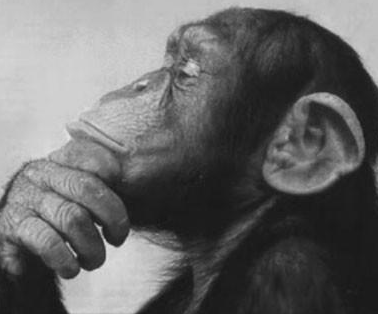
We live in a world of unknowns. Nothing is certain. Life is an unfolding mystery. Yet most people try to create a sense of certainty in their lives in order to feel safe. The unknown can be a scary place, so we try to know as much as we can in order to avoid any nasty surprises. However no matter how much we know, this sense of certainty is an illusion. We can never be sure what the next moment will bring no matter how much we try to protect ourselves.
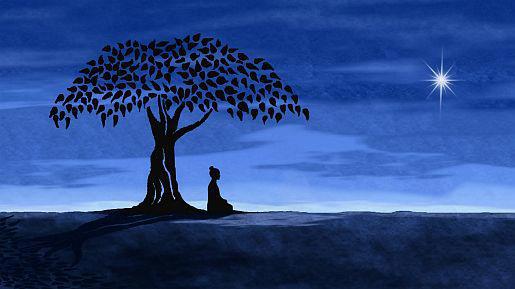
Another way to be that is more real is to become more comfortable with not knowing and to hang out for a while in the unknown. One of the concepts of Zen Buddhism is beginner’s mind. This is an attitude of openness, eagerness, and lack of preconceptions when studying a subject, even at an advanced level. It’s like coming to something as if for the first time. Such a place of not knowing arouses curiosity and interest in the world, making it appear new, bright and fresh in every moment.
We can learn to bring this practice of open curiosity to all of our life. The longer we can remain in the unknown of a situation, the more that the limitless potential of Being is available to us. The Water Element is comfortable with the unknown, with the hidden depths.
The Water Element, as the Greater Yin, is the Element closest to the deepest places within us. It is a gateway to our unconscious, to the Tao and our place within it. As humans we are all waves in the great ocean of the Tao, arising as forms out of the ocean, and falling back into the formless. We are both formless and form, constantly manifesting and dissolving.
As we comprehend this universal truth and begin to have our own experiential glimpses of this reality, we come to realise that nothing can be known, and that being in the unknown is the deepest wisdom. We see that the more certain we are of what we know, the more we are cut off from all we don’t know. As the Zen master Shunryu Suzuki succinctly said, “In the beginner’s mind there are many possibilities, but in the expert’s there are few.”[i]
When we begin to live in not knowing, we find that we are not taking action, but that action arises anyway. The more we are in contact with the fundamental ground of the Tao, the more we are able to watch our actions arising like waves out of the ocean. We become spectators, marvelling at the unfolding of our own lives.
Staying in the deep Water of not knowing, without the impulse to move to action, allows the fullest transformation from potential to manifestation.
Not knowing is true knowledge.
Presuming to know is a disease.
First realise that you are sick;
then you can move towards health.
The Master is her own physician.
She has healed herself of all knowing.
Thus she is truly whole.[ii]
[i] S Suzuki, Zen mind beginner’s mind, Weatherhill 1970, p. 21.
[ii] S Mitchell (trans), Tao te ching, Harper Perennial 1992, p. 71.